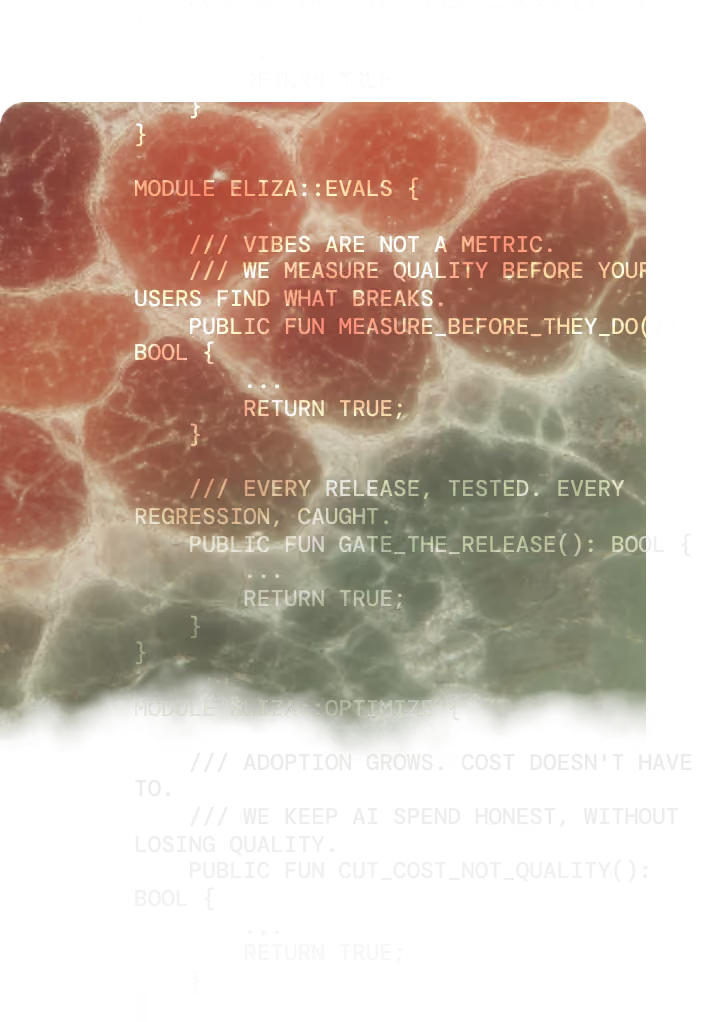
Replace vibe checks with measurable AI quality
AI systems are easy to demo and hard to trust in production. We build the evals, traces, test suites, and release gates that show what works, what breaks, and whether each change makes the system better.


Without evals, upgrades become fire drills and failures take hours to trace.
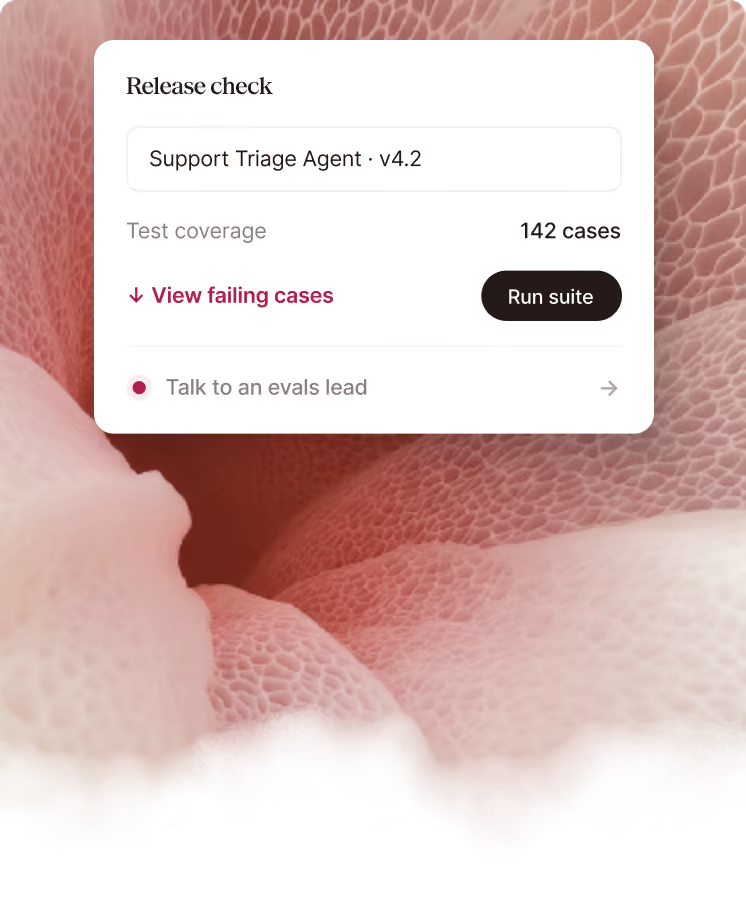
Quality before release
Catch regressions before users do, with test suites and release gates built around the behavior your system needs to deliver.
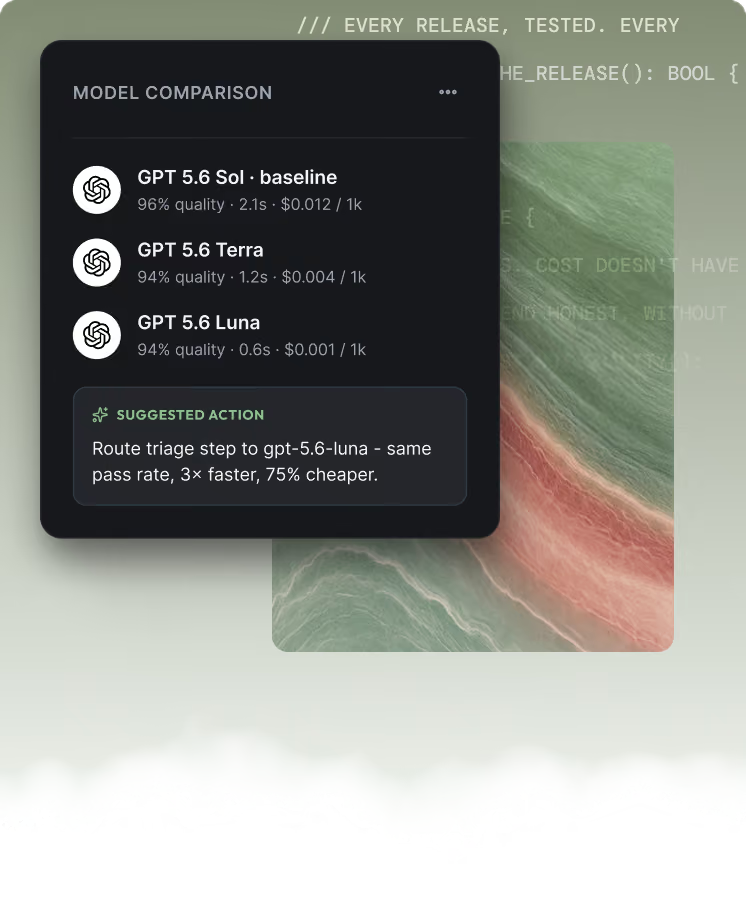
Model decisions with evidence
Compare models, prompts, retrieval, and tools on quality, latency, and cost so decisions are based on data instead of opinion.
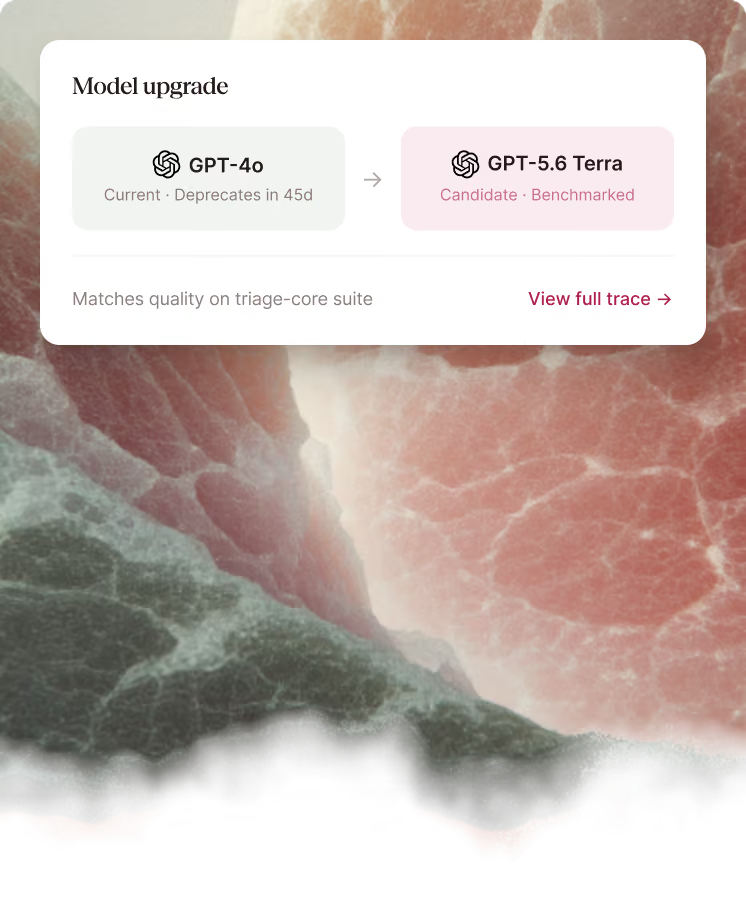
Stay current as models change
New model releases should be an upgrade path, not a quarterly panic. Evals let teams adopt better models with confidence.
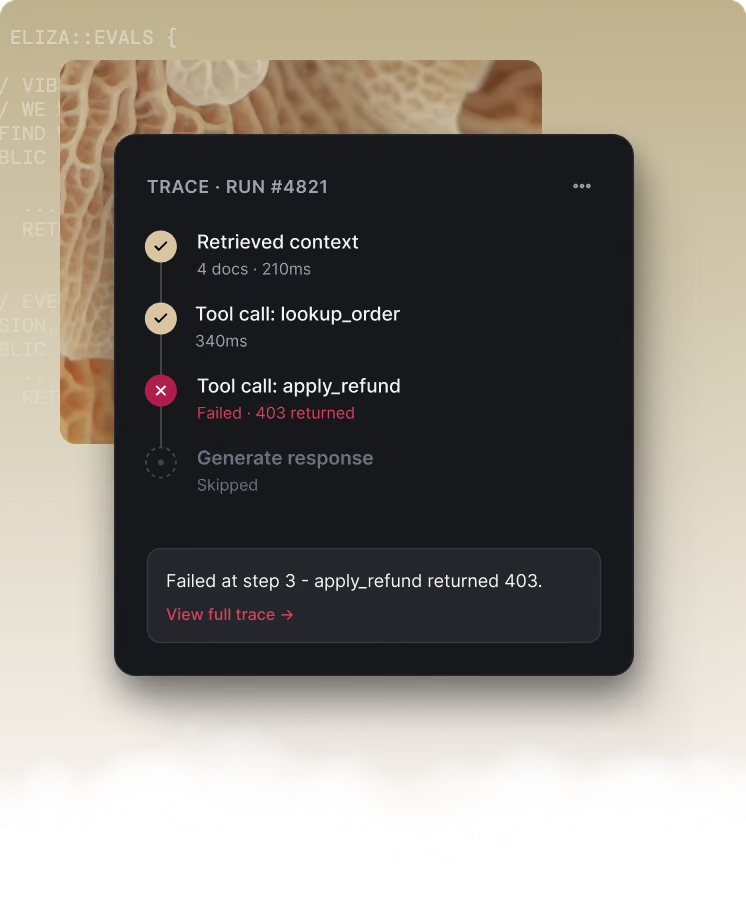
Faster failure diagnosis
Trace the path from input to output, including retrieval, tool calls, and agent steps, so teams can find what broke and fix it.
What a working eval system includes
Good evals are not a spreadsheet of sample prompts. They are a repeatable quality system for the AI workflow your users actually touch.

A versioned set of test cases that exposes expected behavior, edge cases, regressions, and failure modes. Built for the engineers and domain experts who maintain the system.
Side-by-side runs across models, prompts, retrieval strategies, and tool configurations, with quality, latency, and cost measured together.

Visibility into the steps behind an answer: retrieved context, tool calls, reasoning path, generated output, and where the failure happened.

A loop that turns user feedback, failures, and red-team findings into specific prompt, retrieval, guardrail, or workflow changes.
Quality checks that fit into your development workflow so AI changes can be shipped with evidence instead of hope.

A repeatable process for testing new models against your workflows before upgrading, so teams can keep pace with the model landscape without guessing.
Where in-house eval efforts get stuck
Production traffic is useful, but it does not replace targeted cases that expose specific behaviors and failure modes.
Users touch the full product: prompt, retrieval, tools, guardrails, UI, permissions, and workflow. Evals need to test the system.
Thumbs up and thumbs down are not enough. Feedback needs to become labeled failure patterns and shippable fixes.
Teams change prompts, models, and retrieval without knowing whether they improved one thing and broke another.
What Evaluation delivers
We build eval systems that work with your existing eval, observability, CI, and model stack. The methodology and operating rhythm are the product, not another tool you have to adopt.
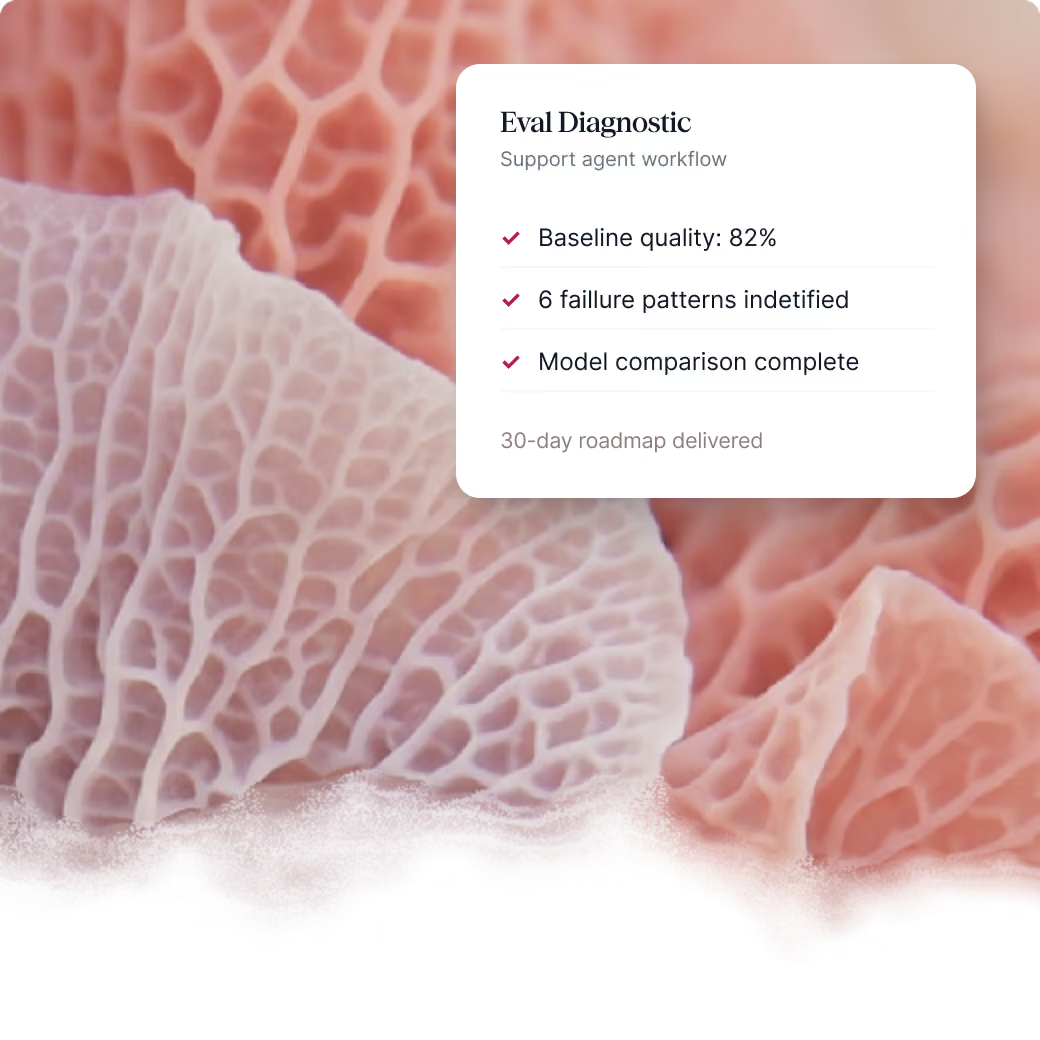
Audit one production AI workflow, baseline quality, identify failure patterns, compare model or prompt options, and leave with a 30-day roadmap.
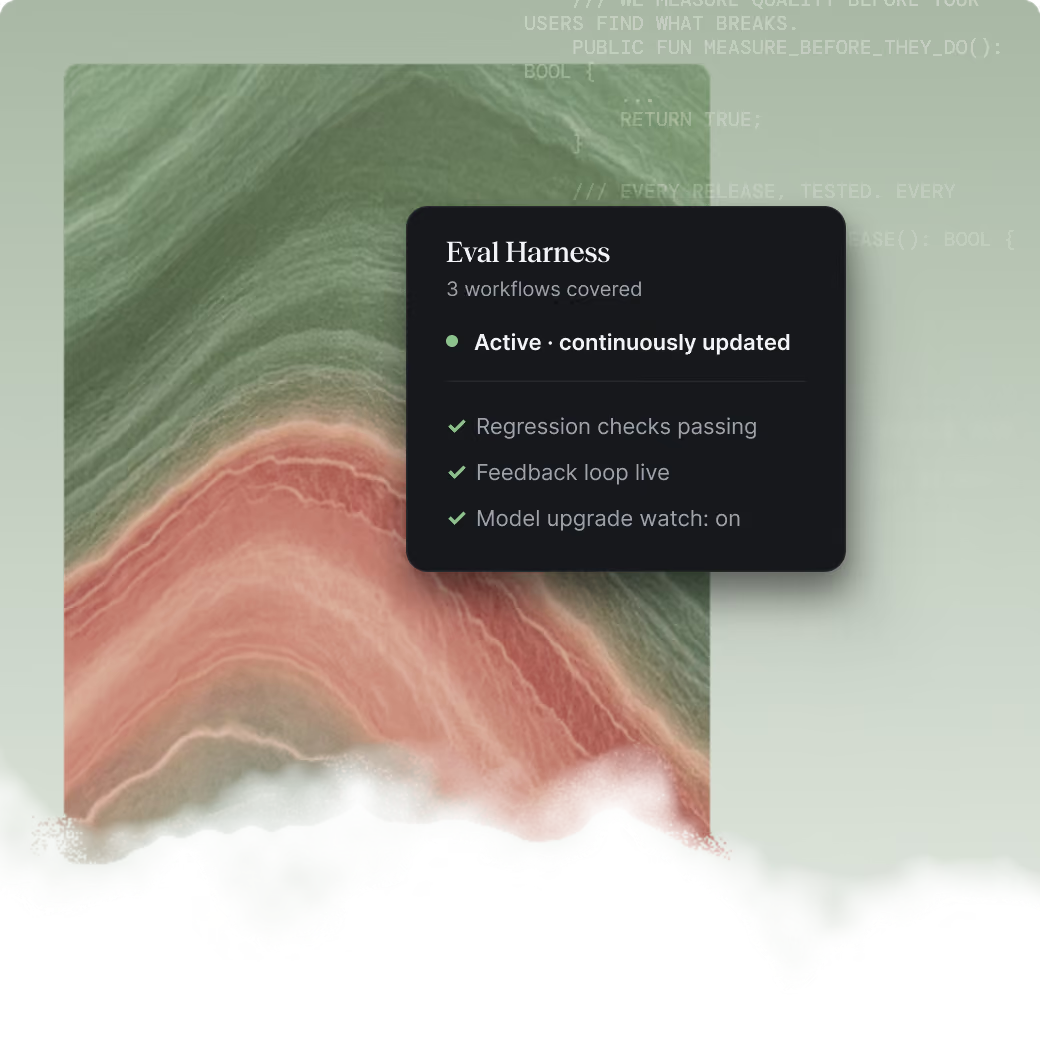
Build the first working evaluation harness: test suite, model comparison, tracing, regression checks, and quality gates for one or two workflows.
Extend the foundation across more workflows, teams, dashboards, feedback loops, and operating reviews.
Keep the eval system current as models change, usage grows, older models approach deprecation, and new failure patterns appear.
Start with one workflow
The best eval work starts where the pain is concrete: one agent, copilot, RAG flow, or AI-assisted workflow that needs to be made defensible. In 2-3 weeks, an Evaluation Diagnostic gives your team a quality baseline, named failure patterns, model comparison, and a practical roadmap from baseline to release gate.