Keep AI adoption growing without runaway cost
As AI usage spreads, spend, latency, and failed calls can grow faster than visibility. We help teams reduce waste and improve runtime performance without lowering quality



Model cost isn't the issue. It's not knowing which workflows waste spend or hurt latency. Eliza baselines usage, cuts waste, and safeguards quality.
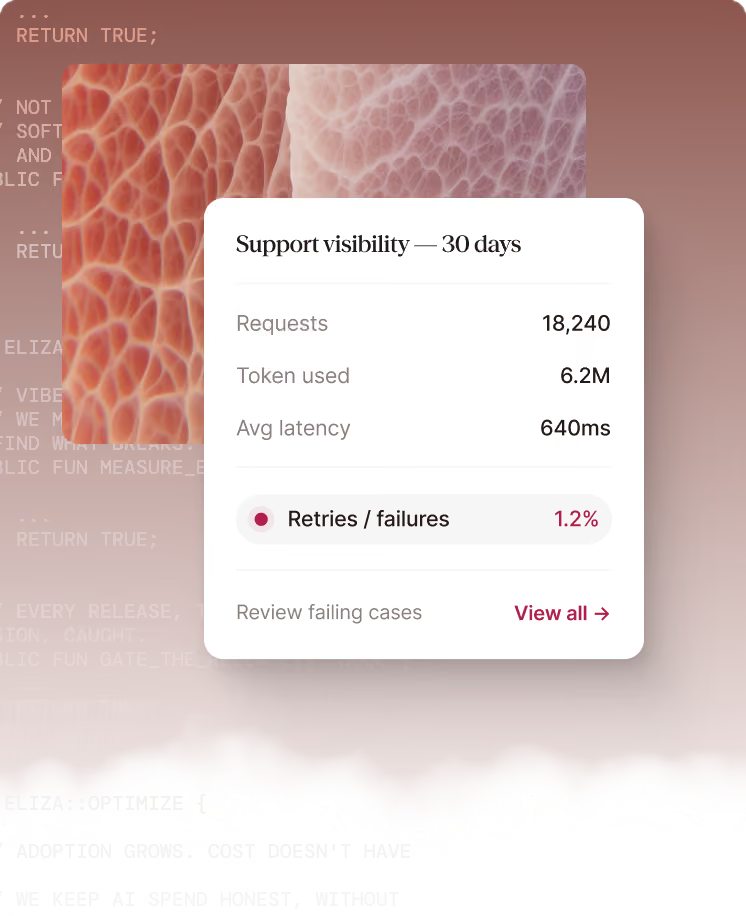
Spend visibility
Know where tokens, requests, latency, retries, and failures are coming from across real workflows.
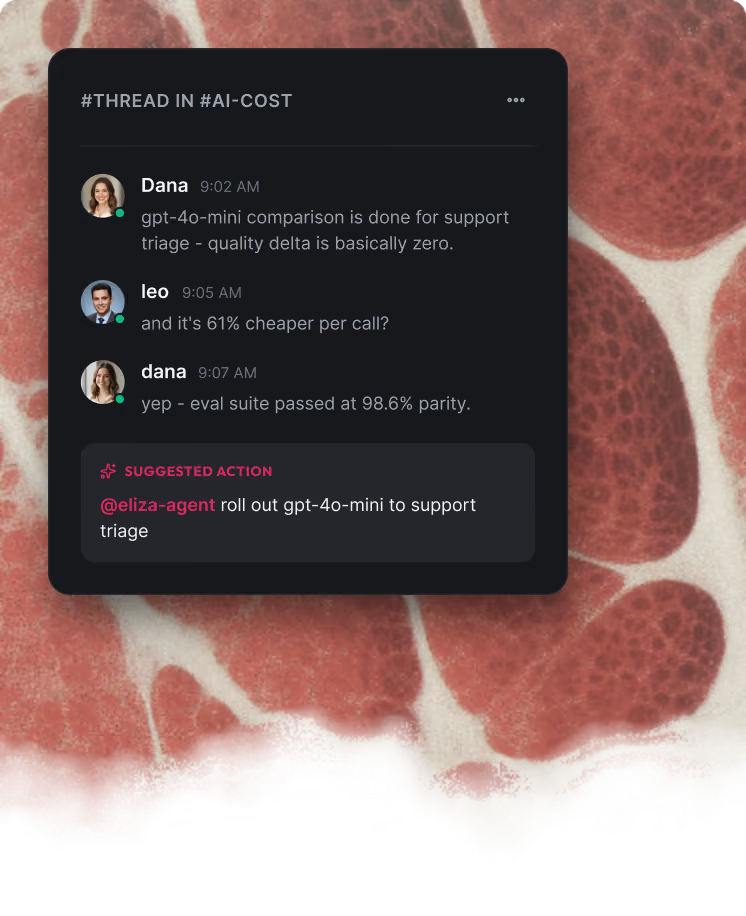
Quality-preserving savings
Reduce cost without guessing, using evals to prove that cheaper or faster approaches still meet the quality bar.
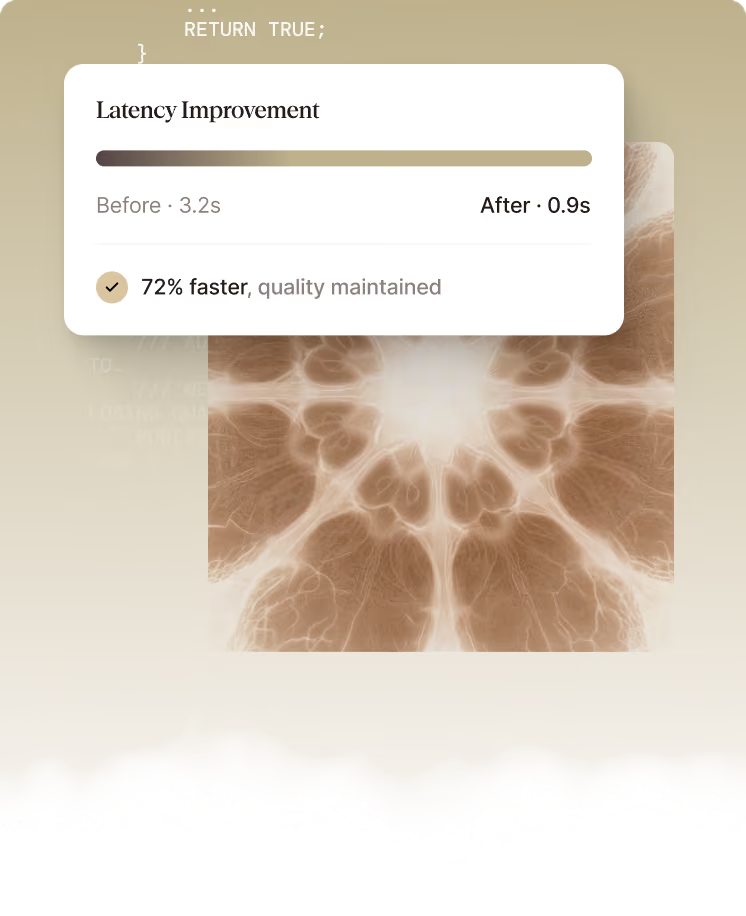
Performance that users feel
Improve latency, responsiveness, and runtime reliability so workflows stay useful as adoption grows.
What we optimize
Optimization is not just prompt trimming. It is the discipline of making AI systems cheaper and faster to run while preserving the quality that made them useful.

Map token usage, request volume, latency, retries, failures, and cost by workflow so teams can see where the money and time are going.
Match the task to the right model. Use stronger models where they matter and smaller or cheaper models where they meet the quality bar.

Reduce bloated prompts, repeated instructions, oversized context, and unnecessary output that adds cost and latency without improving the result.

Use prompt caching, batching, and async processing where the workflow allows it, especially for repeated context or lower-priority workloads.

Remove unnecessary model calls, replace AI with simpler logic where appropriate, parallelize work where useful, and simplify handoffs.

Use quality checks to make sure savings don't quietly reduce accuracy, safety, reliability, or user experience.
Where AI spend gets wasted
Teams use the strongest model for every task because no one has proven where cheaper models are good enough.
Systems send long instructions, repeated background, stale documents, or irrelevant retrieval into every call.
Workflows use multiple model calls where one would work, or use AI where rules, search, or simpler software would be faster and cheaper.
Users don't complain about architecture. They just stop using workflows that feel slow or unpredictable.
Systems repeatedly process the same instructions, context, or outputs instead of reusing work they have already paid for.
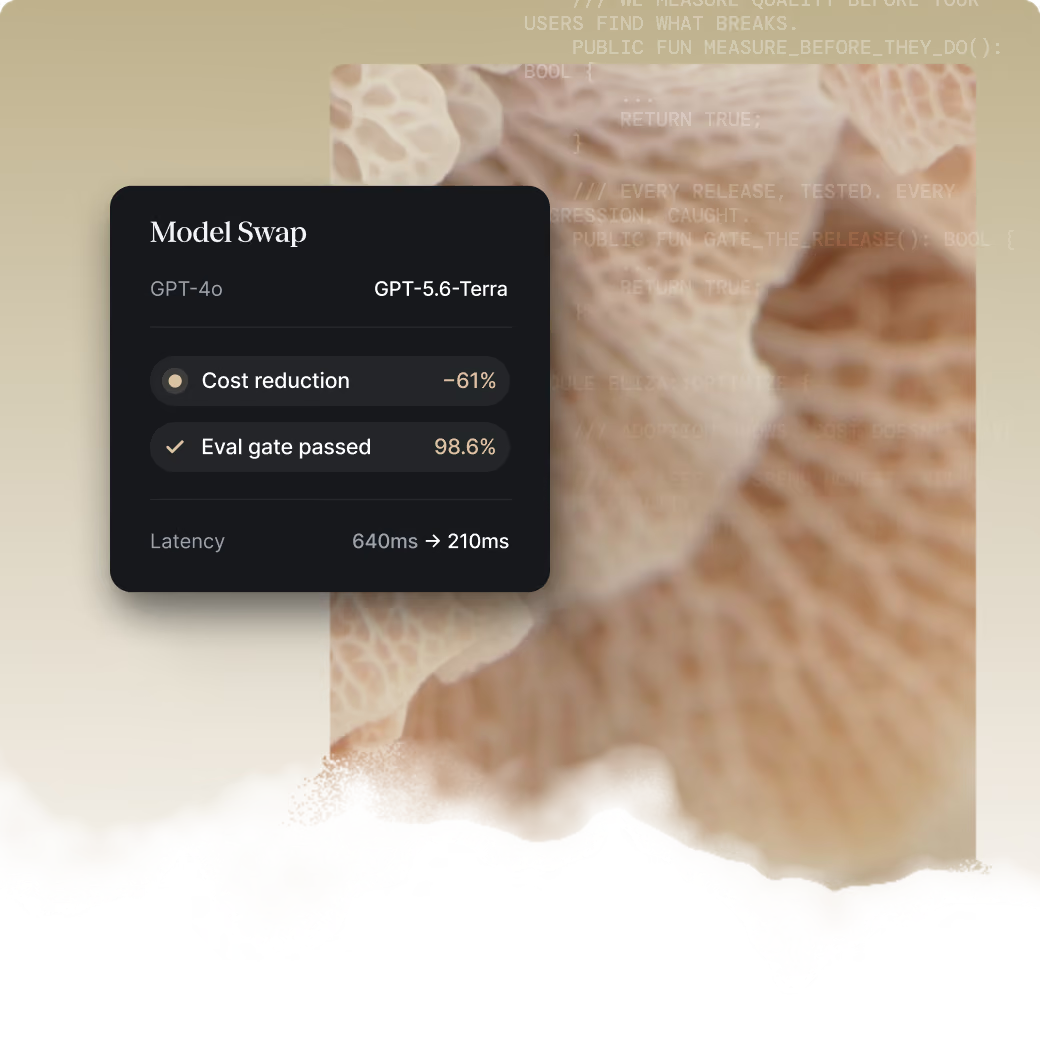
Optimization needs a quality bar
Evals measure whether the system works. Optimization improves how efficiently it works. We test each change against a quality bar so lower cost and faster performance do not create regressions.
Start with an AI Optimization Diagnostic
In 2 to 3 weeks, Eliza reviews one production or high-usage AI workflow to show where spend and latency come from, what can change, and what savings are realistic. Your team leaves with a prioritized 30-day optimization roadmap.